Microsoft is a company of massive scale, with thousands of designers and engineers building interconnected products across dozens of organizations. In an environment like this, fragmentation rarely appears as a crisis. It shows up as small inconsistencies that hint at deeper structural misalignment.
In November 2015, OneDrive and SharePoint were under new leadership, and Microsoft’s CEO Satya Nadella requested a product review in which we would focus on the mobile experiences in development for each. Unprompted and unexpectedly, he asked if navigating the path labeled “People” would be the same and familiar across apps. The People experience was not a conversation we were prepared to address, and I saw the profound underlying obstacle I wanted to tackle.
Important customer journeys crossed Office, OneDrive, SharePoint, Outlook, and other services, but the teams were making design decisions and assigning meaning independently. Products that addressed similar scenarios used different interaction patterns, visual treatments, and flows. This fragmentation created confusion and exposed a lack of internal collaboration to customers. We were suffering from the same problems we were trying to solve.
That moment became the catalyst for me to lead a multi-year, cross-organizational effort to identify shared scenarios, align teams around common design and code patterns, and partner with the emerging Fluent Design System to bring coherence to Microsoft 365 at scale.
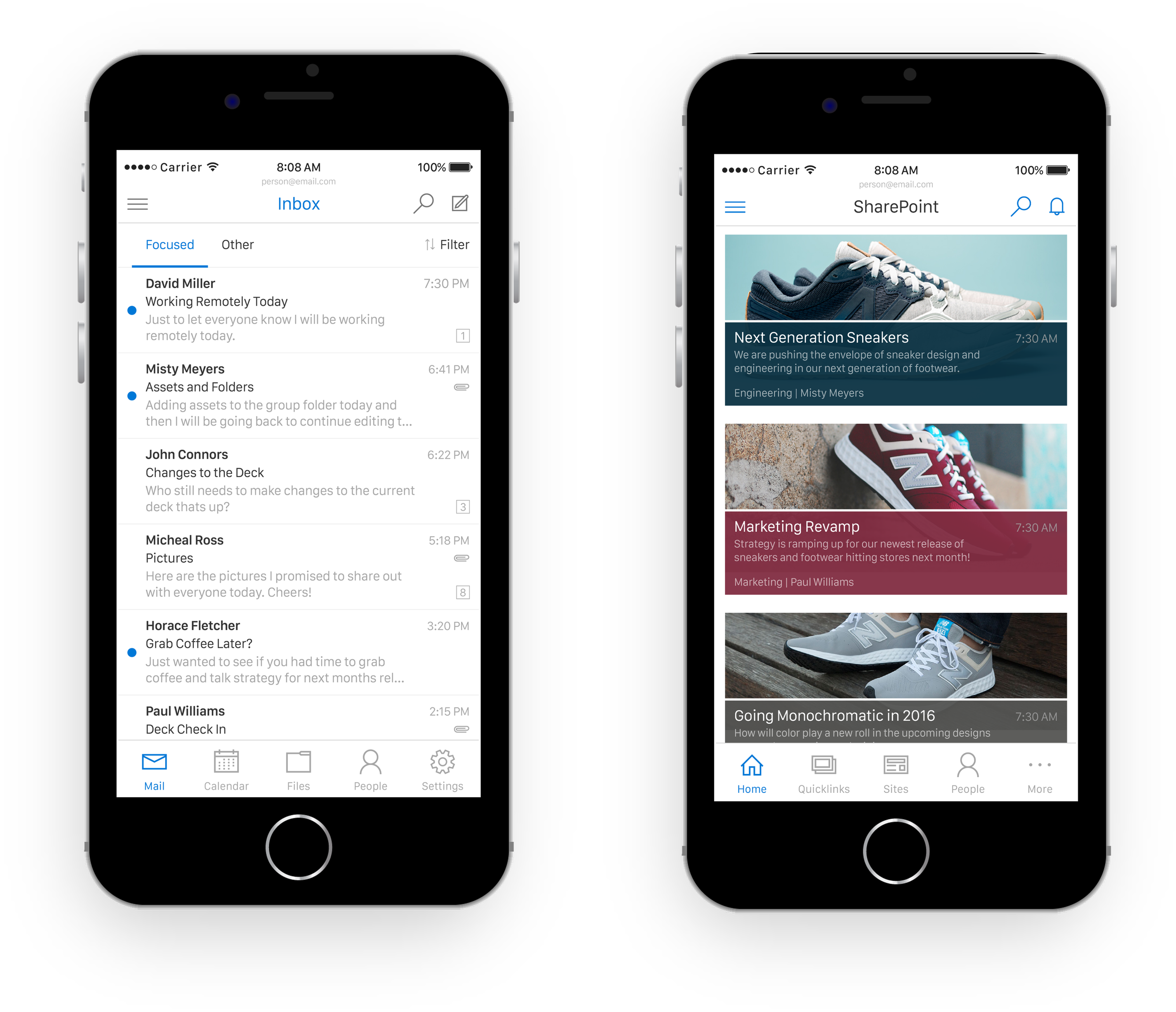
I shared these Outlook and SharePoint screens in an executive review where an unexpected question called attention to the “People” icon: would tapping it launch the same experience across Microsoft 365 apps? What looked like a small inconsistency was evidence of a much larger systems issue.
Fragmentation was slowing teams down and eroding trust
Across Microsoft 365, related apps behaved differently across endpoints and users experienced friction moving between products. Engineering teams duplicated effort because no shared components or interaction patterns existed. No one owned cross-product scenarios, and product velocity incentives favored divergence over reuse.
What looked like small inconsistencies were symptoms of a deeper systems problem.
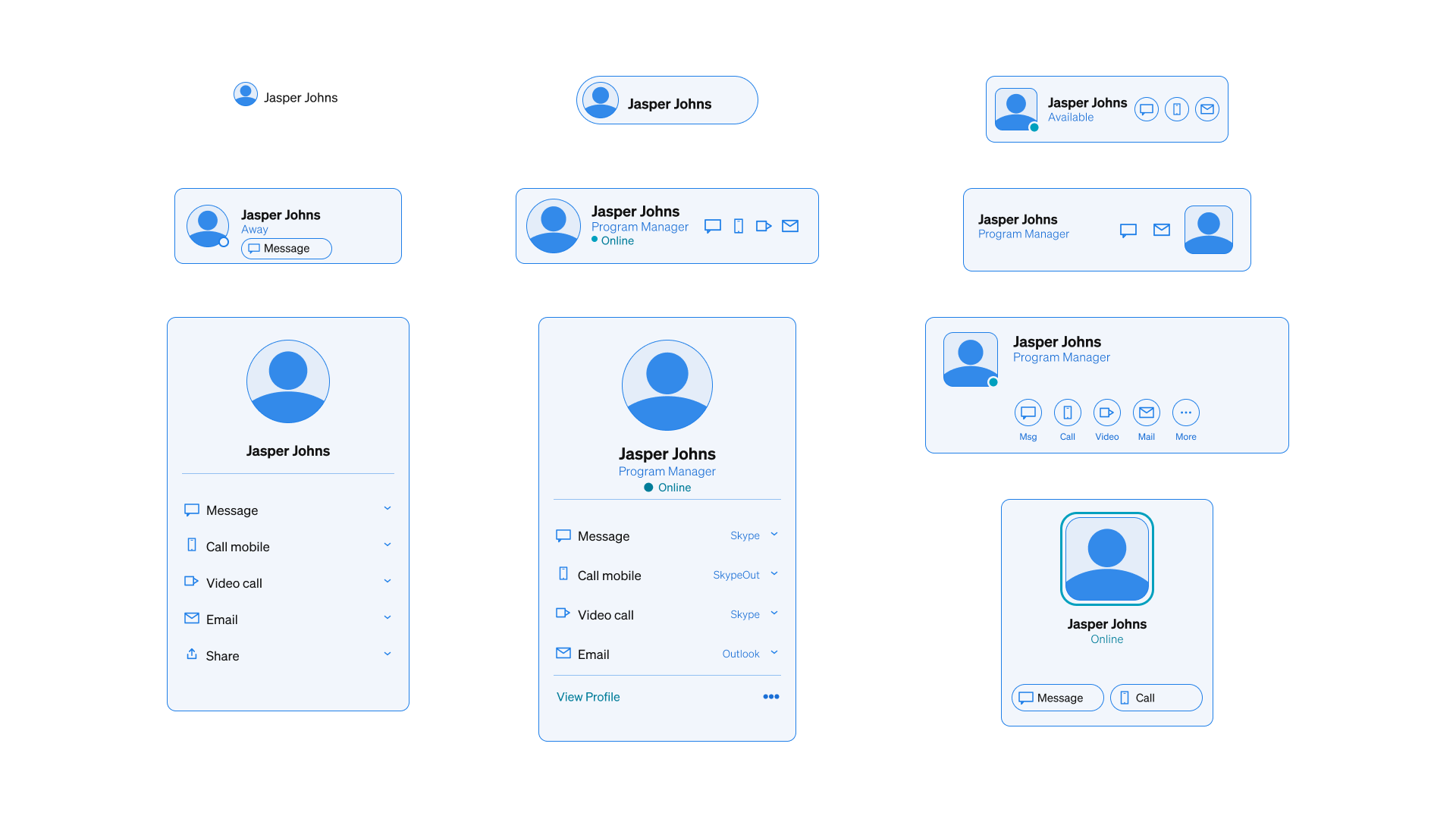
What looked like UI inconsistency was really organizational inconsistency.
Fragmentation was a systems problem
Addressing the fragmentation meant defining the cross-product scenarios that mattered most, standardizing a singular set of shared patterns and modular components, and creating a distributed, community-driven model that preserved product craft velocity while making experiences coherent across Microsoft 365.
As the design leader for OneDrive and SharePoint, I recognized that this was not a design detail, it was a strategic opportunity. My task was to frame the problem in a way that resonated across teams and leadership, and to mobilize the organization around a shared path forward.
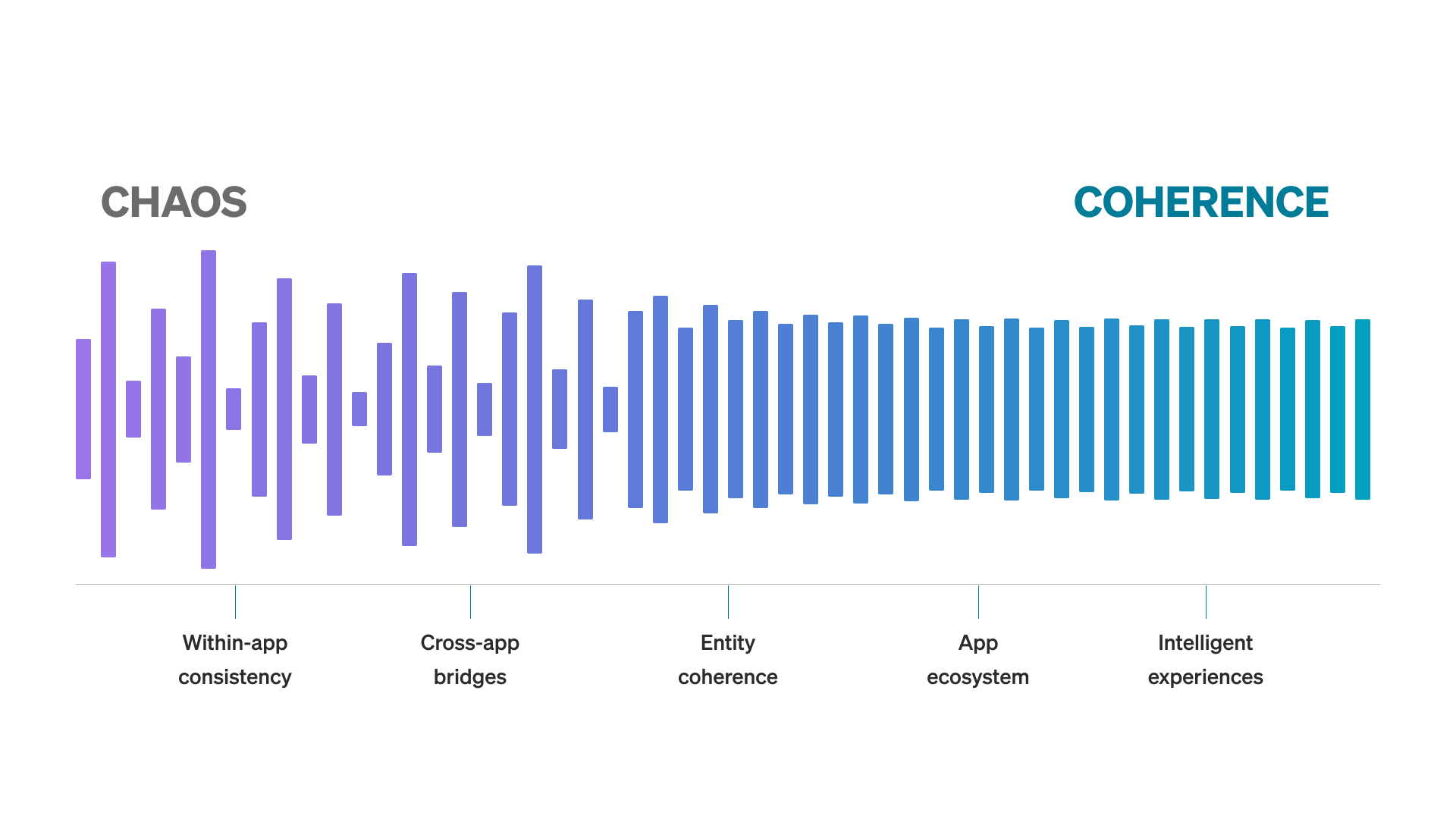
Moving from fragmented experiences to a coherent whole meant thinking beyond a traditional design system. The work progressed from creating consistent patterns within individual apps, to building bridges across apps, unifying how shared entities like people and files behaved, connecting those experiences into a coherent app ecosystem, and ultimately enabling intelligent experiences across products, services, and data.
Building a coalition for coherence
To lead this transformation, I reframed a single confusing inconsistency as a systems-level challenge. I directed my teams to map the important scenarios that crossed product boundaries to showcase the breakdowns. This gave me a much stronger foundation for persuading peers and leaders than arguing in the abstract. I focused on predictable behavior and shared mental models grounded in real user workflows, a framing that resonated with product teams and executives.
Teams were invited to contribute by championing a distributed, product-first model. Each could design and contribute patterns, documentation, and components without losing autonomy. This approach preserved velocity while building shared ownership. Over time, this model evolved into a centralized stewardship team. Product teams across Microsoft 365 continued to contribute patterns and components that kept the system healthy and adaptable.
To help leaders understand why coherence mattered, I articulated a clear narrative. The case rested on reducing cognitive load, accelerating development, and strengthening the Microsoft 365 ecosystem. Through this narrative, I mobilized engineering, design, and product management around a shared strategic direction, turning a small inconsistency into a multi-year transformation.
A shared foundation across Microsoft 365
Under my leadership, the team built a catalog of cross-product scenarios, reusable Fluent components, design tooling and documentation, and an internal community supporting contribution and adoption.
The coherence effort delivered more than shared components, it created a unified mental model across Microsoft 365. Experiences became predictable across apps and endpoints. Engineering teams reduced duplication and increased speed through reuse. Product teams aligned around shared scenarios and stopped reinventing patterns in isolation. It influenced product roadmaps, accelerated modernization efforts, and shaped the design that millions of people use today.
By 2017, more than 45 product teams were using the Fluent component library, turning the coherence strategy into a shared foundation adopted across the company at Microsoft. The open-source version had earned thousands of GitHub stars and hundreds of forks and watches, signaling adoption, and more importantly, trust.
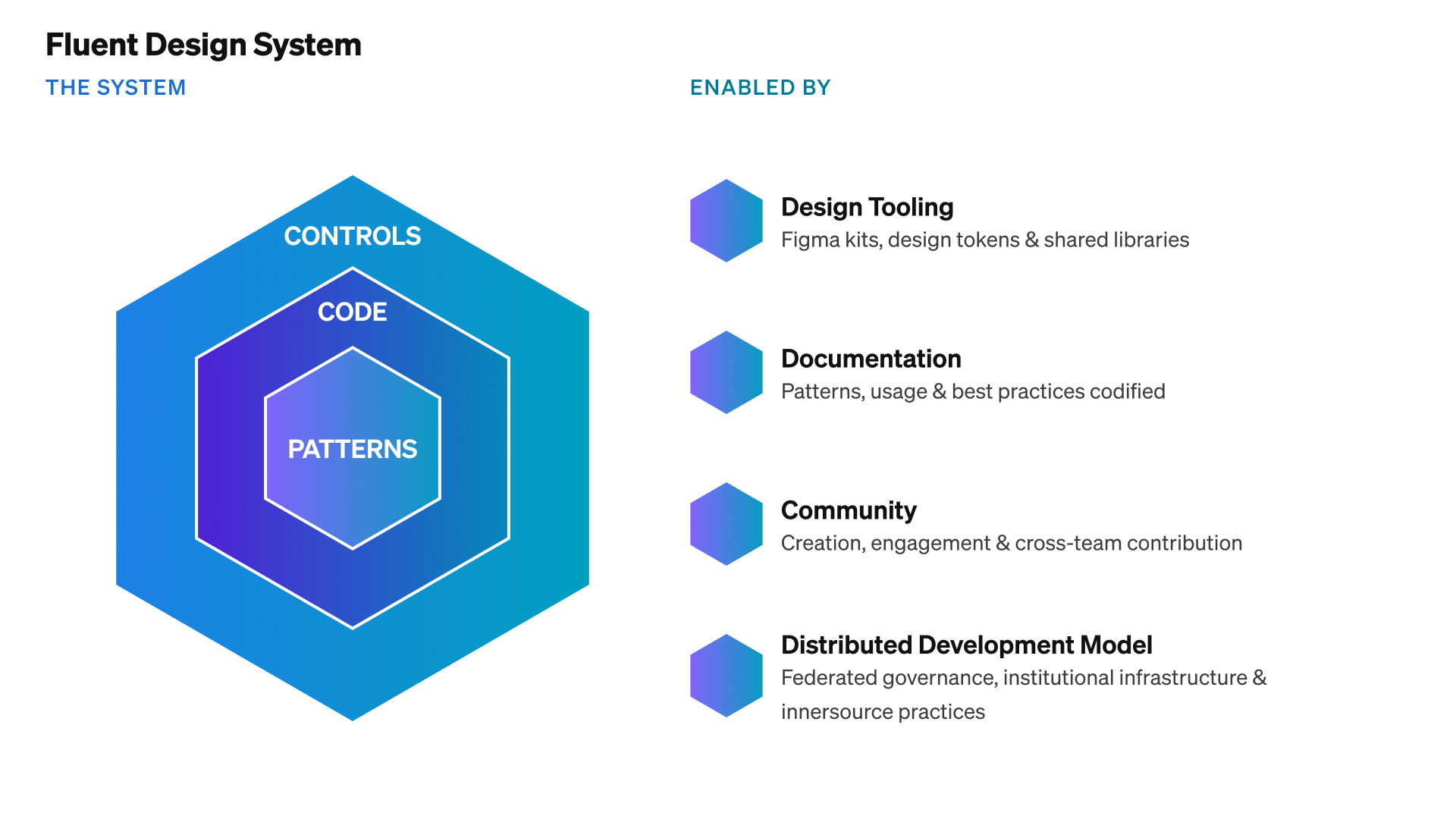
A design system at Microsoft’s scale required more than common components. Fluent provided the foundation, while tooling, documentation, community, and a distributed development model enabled teams across the company to build, contribute, and create greater coherence together.
Systems change scales through shared ownership
What I carry forward from this experience as a leader is a deep understanding of how meaningful change happens.
Small signals can reveal large system problems, and early action can change the trajectory of an entire product ecosystem. Coherence scales through a distributed ownership model, not centralized control.
Success follows the combination of compelling narrative framing, supported by workflow evidence and practical alternatives, and the cross-organizational coalition to execute it.